Preserving Greenville History
One Artifact at a Time
by John Nolan
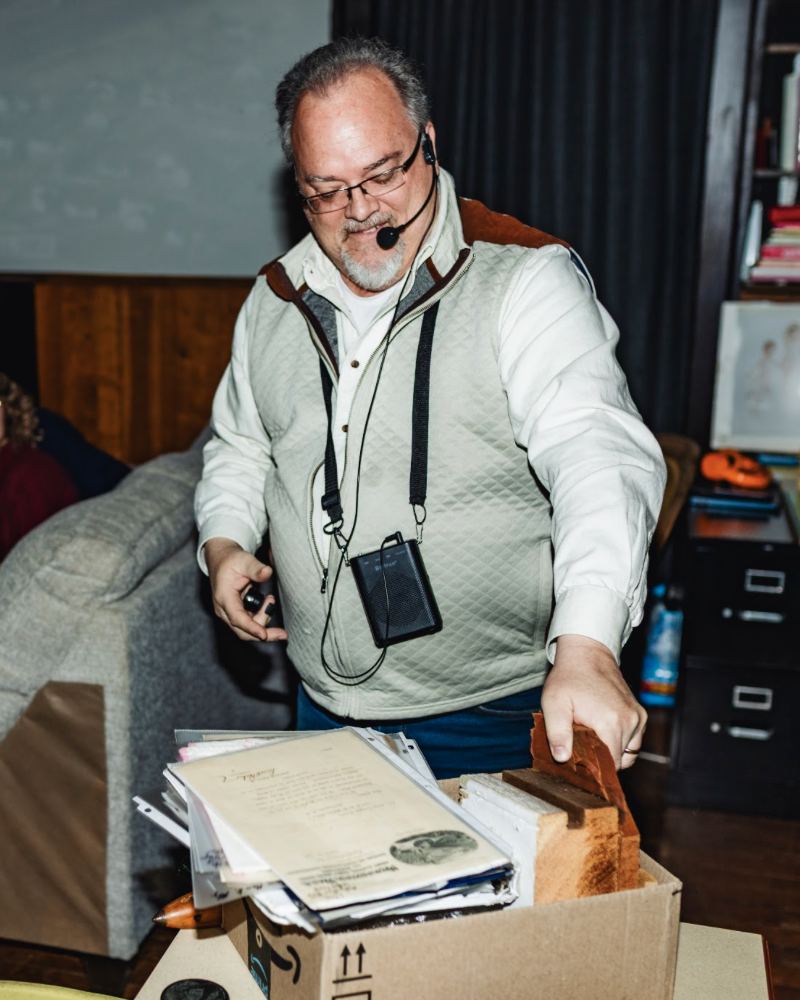
Photo by IsaacCropsey.com
Twenty years ago, I started Greenville’s first tour company, Greenville History Tours, with two downtown walking tours.
From the beginning I was fascinated with old photos of our city and comparing those sites to the same location now. Since then, I’ve collected over 50,000 old photos of Greenville and have also taken about 80,000 in an effort to document our city as it changes now.
About five years ago I added a new dimension to supplement giving tours and lectures by collecting artifacts to put people in touch with cool things from the city’s past.
Out of the hundreds of objects I’ve since collected spanning from 1812 until now, I’d like to share just a few of my favorite textile-related finds, their significance, and how I acquired them.
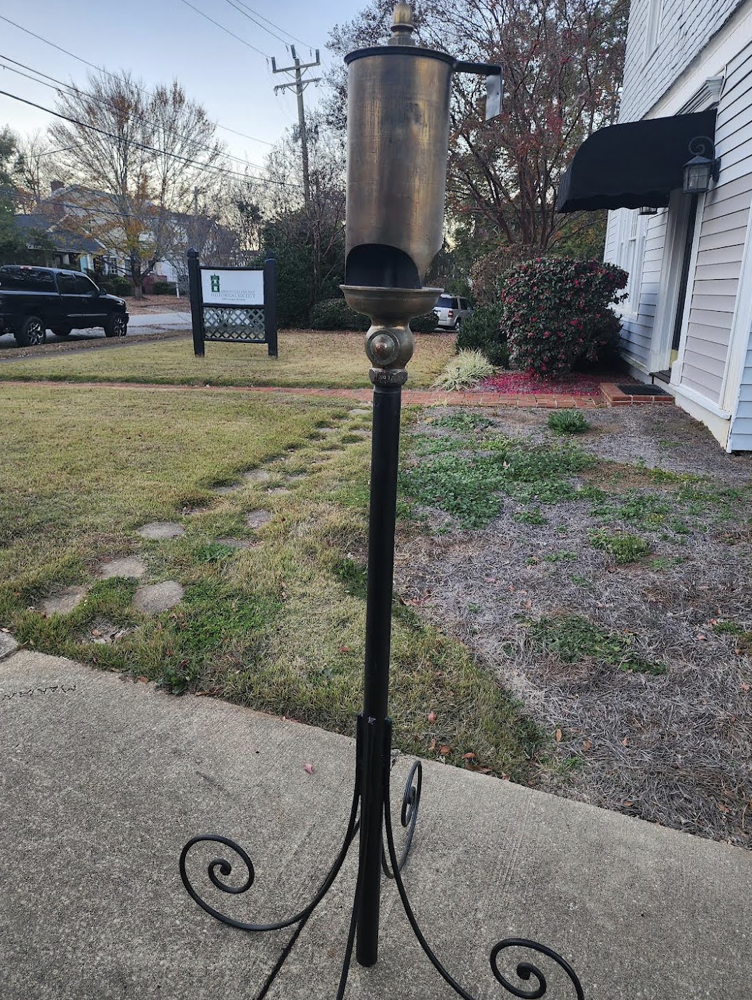
The earliest object dates from the 1890s. On a trip to Pickens last fall, I went to an antique store I hadn’t visited before. There were items that looked promising, so I asked if they had any Greenville or mill related antiques.
The owner took me around the corner to show me what she thought would interest me. I just about couldn’t contain myself when I saw an old train whistle mounted on an iron stand and reaching about 7 ft. tall.
She proceeded to tell me that it was the original village whistle from Mills Mill in west Greenville and the story of how she acquired it. The only other one I’ve seen before was the Camperdown mill whistle, which is on display in the mill memorabilia room at St Paul’s downtown. This was the exact same kind.
I contacted my railroad expert friend about it and sent him a photo. He immediately recognized it as a Crosby 3 steam whistle, said they were rare, and that often railroad companies donated them to textile mills in the late 1800s for them to use as an announcement sound throughout the day for workers to know when shifts and meal times began and ended.
I was astounded to run across this amazing artifact and purchased it. People can see it on display in the lobby of the Greenville County Historical Society.
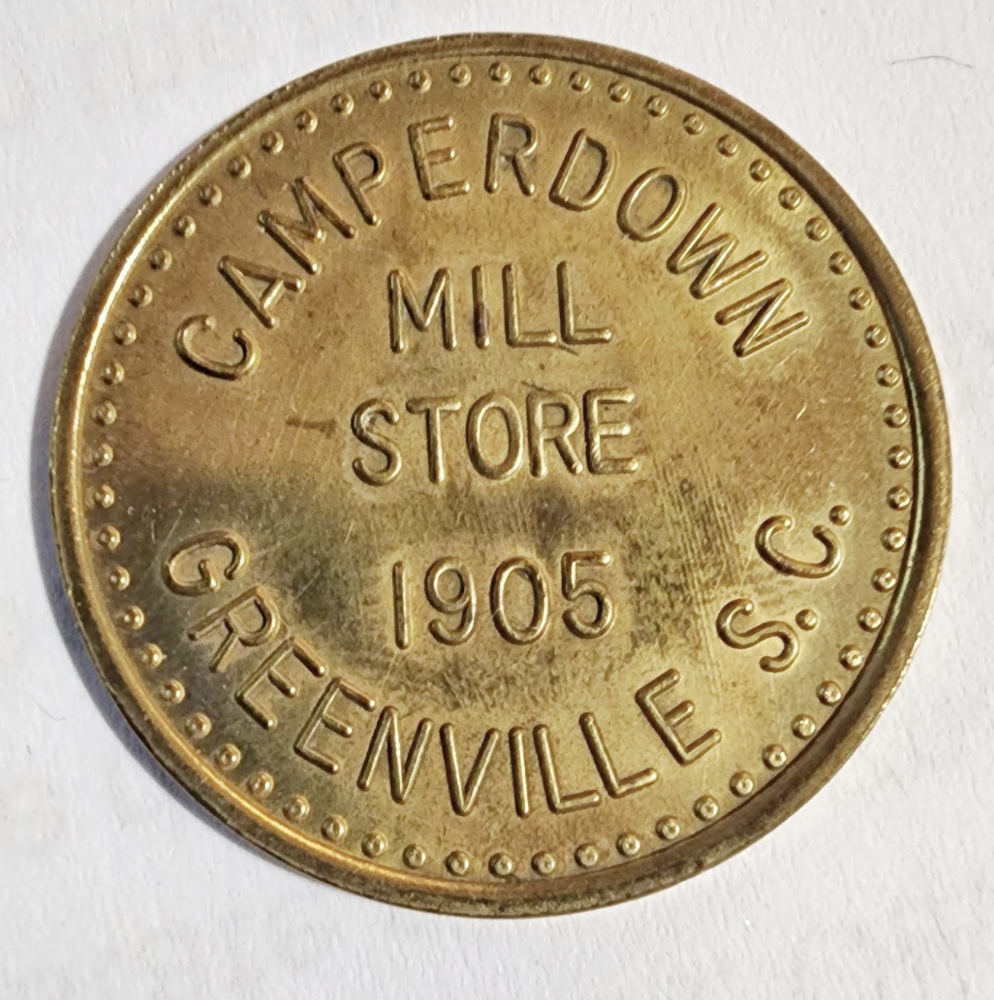
Another highly regarded object I acquired is a Camperdown mill token, often referred to as “scrip” or “loonies.”
Objects relating to the Camperdown mill are extremely rare since it was the earliest mill complex on the Reedy River downtown and also because it closed so long ago in 1956.
I’ve tried to collect as many examples as possible of various Greenville mill scrip since each company minted and printed their own currencies for exclusive use in their villages.
Scrip allowed a worker to borrow against their next paycheck (essentially an I.O.U), so they were of no use in any other stores besides their village company store. For Camperdown, it is not even known exactly where the company store was located in the village. The only Camerpdown token I’d ever seen was also in the Camperdown memorabilia room in St. Paul’s church.
After purchasing a number of tokens off of E-Bay, I noticed one seller seemed to have the biggest variety. I contacted him directly to inquire about other tokens he might have for sale and, after hearing of my passion for preserving Greenville history, told me about a one-of-a-kind mint condition Camperdown mill coin from 1905 that he could sell me. Needless to say, I bought it and am absolutely thrilled to have it. I’ve since acquired 2 others, but they’re not in nearly as good condition as that first one.
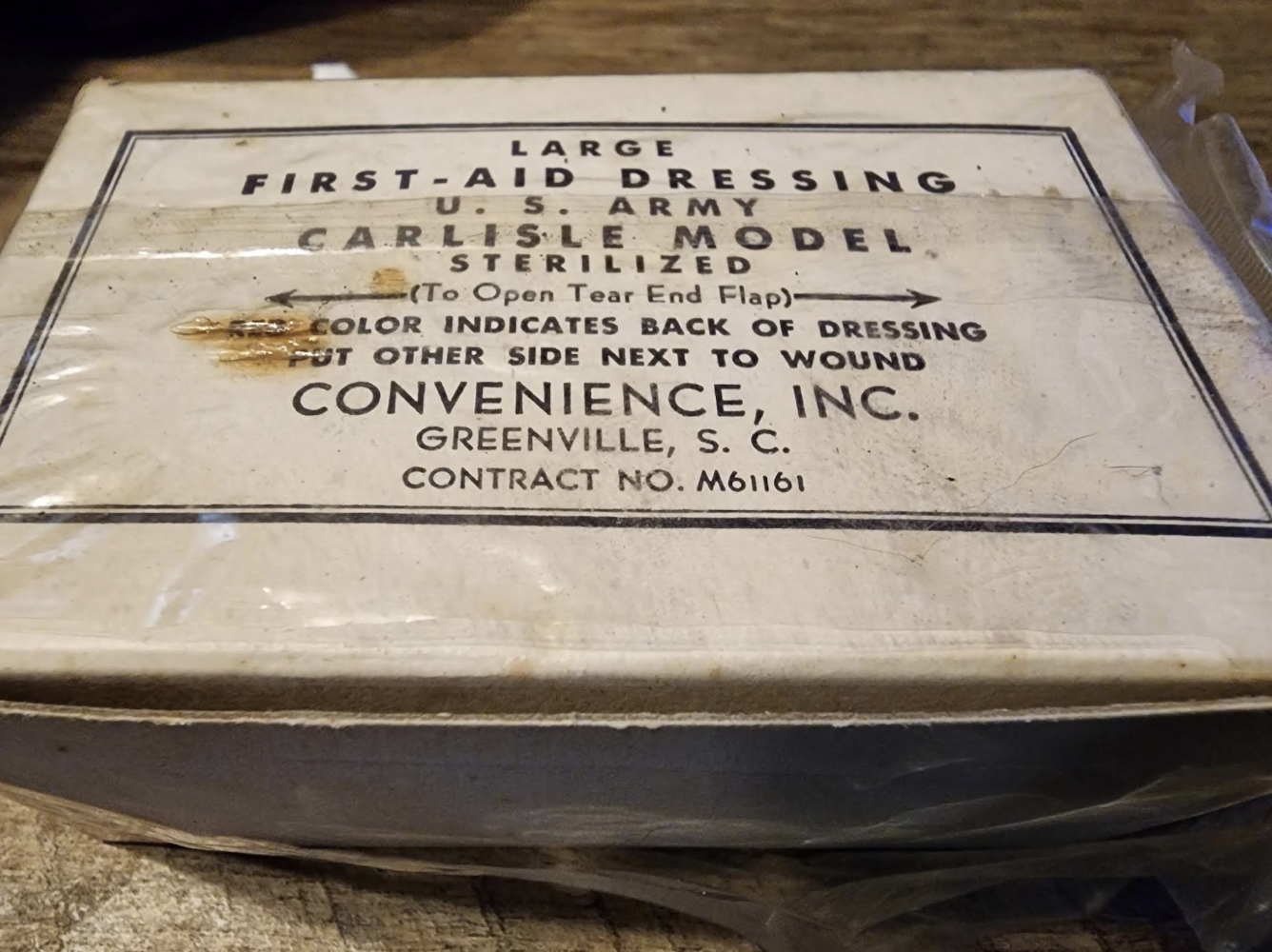
Finally, I was searching online for Greenville objects and came across a very generic box holding medical gauze made by a company called Convenience, Inc. in Greenville, S.C.
I had never heard of that company before, but bought it knowing it might be a cool find. Well, after doing some research, I saw it clearly was.
After World War II began in 1939 and major European countries became involved, America was drawn in. By 1941, West Side textile mills like Mills Mill and Brandon Mill helped supply a myriad of textile products for our troops and allies, medical supplies being one of them.
In February 1941, local Greenvillians George Norwood, W.D. Young and R.C. McCall saw the need and chartered a factory to produce surgical bandages, pads, absorbent cotton and similar products at a capitalization of $130,000. They named it Convenience Inc. This unused WWII first aid gauze was one of many they sent around the world to bandage up wounded soldiers.
If you have artifacts and/or photos that were a unique part of Greenville’s past, I’d love to see them if you want to send me a photo at greenvillehistorytours@gmail.com or meet up to share your story.